


Category: ◎Meeting of Minds Series
show-as-event-subtitle
-
Studies on Reading and Writing in Chinese

Date: 14 October 2015 (Wednesday) Time: 12:30-2:00 pm Venue: Room 101 Runme Shaw Building Chair: Prof. Carol Chan, Professor in the Division of Learning, Development and Diversity, Faculty of Education, the University of Hong Kong [button size=”normal” type=”info” value=”Register” href=”https://sol.edu.hku.hk/register-studies-on-reading-and-writing-in-chinese/”] Topic 1: A ‘Simple View of Writing’ in Chinese By Dr. Patcy Yeung Patcy will share…
-
Science of Learning: Lessons Learned about Interdisciplinary Team Science

♦♦♦ REGISTRATION FULL ♦♦♦ 28 January 2015, Wednesday 12:45 pm – 2:00 pm RMS 206, 2/F., Runme Shaw Bldg., HKU Dr. LIM, Soo-Siang, Lead Program Director and Chair of the Coordinating Committee for the Science of Learning Centers (SLC) Program at the US National Science Foundation This brown bag seminar is NOT open to the…
-
fNIRS – a neuroimaging tool for extending the interdisciplinary boundaries of learning research
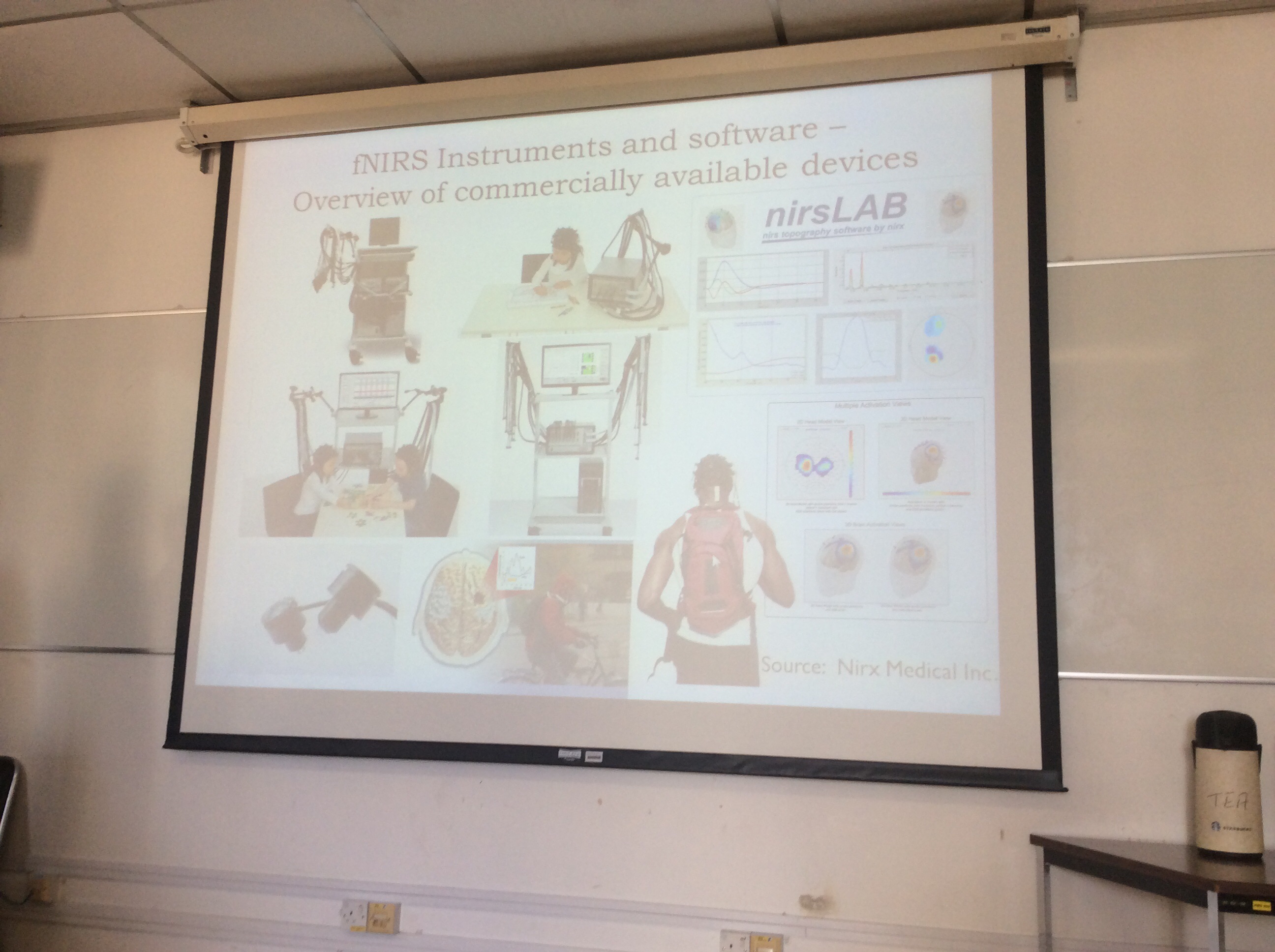
Date: 30th Oct (Thursday), 2014 Time: 12:45 to 14:00 Venue: Room 205, Runme Shaw Building, HKU Speaker: Dr Frank Zhu Abstract: Functional Near-Infrared Spectroscopy (fNIRS) is a non-invasive, non-ionizing, optical method to measure cerebral cortex hemoglobin concentration responses to brain function in humans. fNIRS research is rapidly growing worldwide; the number of publications has doubled…
-
The first brown bag seminar on “Integrating neural, cognitive and pedagogical approaches to learning research and educational intervention”
Date: 21 Jan 2014 Time: 12:30 pm to 2:00 p.m. Venue: Room 204, Rumme Shaw Building, The University of Hong Kong Photos [pe2-gallery album=”http://picasaweb.google.com/data/feed/base/user/111484542756368213331/albumid/5974950361725335713?alt=rss&hl=en_US&kind=photo” ]
-
Impacts of Engineering Education in English Secondary Schools: A Systematic Review
Kutnick, P., Hossain, S.,Good,D. Impacts of Engineering Education in English Secondary Schools: A Systematic Review. The 2012 Annual Conference of the British Educational Research Association (BERA 2012), Manchester, UK., 4-6 September 2012. Abstract: Background: Low entry-rates into STEM subjects contrast with an increasing number of individuals required for careers in engineering. Understanding why a limited number of young…
-
Enhancing cultural diversity through e-PBL
Chan LK, Lu J, Lajoie SP, Wiseman J, Hmelo-Silver C. Enhancing cultural diversity through e-PBL. The 2nd Asia-Pacific Joint Conference on PBL, 24-28 October 2012. Shanghai, China. Awarded “Excellent Performance in Oral Session” Background: Exposure to cultural diversity is important in medical education in order to produce global leaders with multicultural sensitivity and communicative competency.…
-
Using Online Digital Tools and Video to Support International Problem-Based Learning
Hmelo-Silver, Cindy E., et al. “Using Online Digital Tools and Video to Support International Problem-Based Learning.” System Sciences (HICSS), 2013 46th Hawaii International Conference on. IEEE, 2013. Abstract: The goal of this study is to examine how to facilitate cross-cultural groups in problem-based learning (PBL) using video triggers and computer-based technology tools. Medical students from…
-
Living anatomy in the 21st century: How far can we go?
Ganguly PK, Chan LK. December 2008. Living anatomy in the 21st century: How far can we go? South East Asian Journal of Medical Education 2(2):52-57. Abstract: Living anatomy, defined as the anatomy revealed on living humans, is gaining importance in modern anatomy education, and has even been considered to replace cadaver-based anatomy study. We discussed…
-
Advantages of Video Trigger in Problem-based Learning
Chan LK, Patil NG, Chen JY, Lam JCM, Lau CS, Ip MSM. September 2010. Advantages of Video Trigger in Problem-based Learning. Medical Teacher 32(9):760-765. Abstract: Background: Traditionally, paper cases are used as ‘triggers’ to stimulate learning in problem-based learning (PBL). However, video may be a better medium because it preserves the original language, encourages the…